Cordyceps in Mushroom Coffee: What Exercise Trials Measured
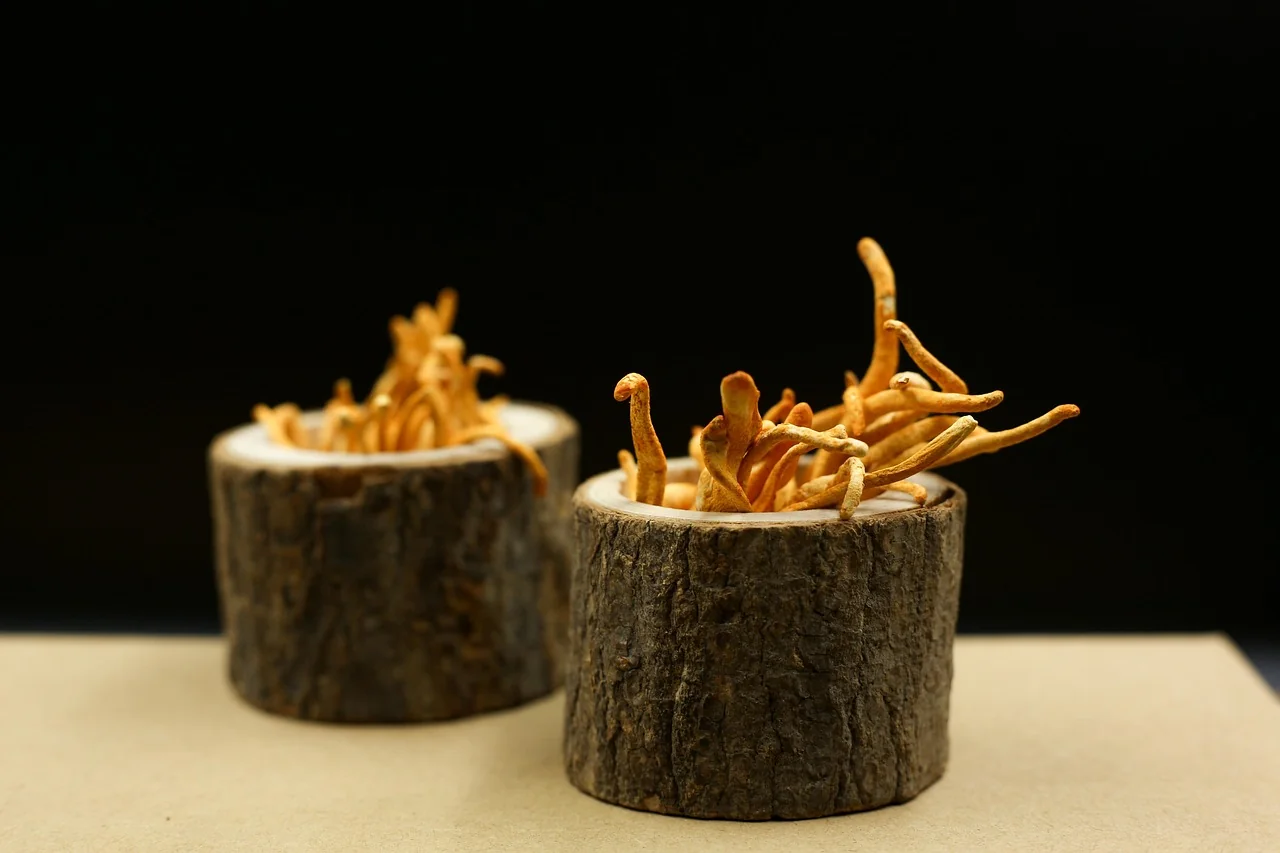
Cordyceps appears in the RYZE Super6 blend, but the current product information does not disclose its amount per serving. Human performance studies use defined Cordyceps preparations; their results cannot be assigned to a serving of this coffee.
A 12-week pilot studied healthy adults ages 50–75
In a randomized, double-blind trial, 20 healthy adults ages 50–75 received a Cordyceps sinensis preparation called Cs-4 at 333 mg three times daily or placebo for 12 weeks. The authors reported changes in ventilatory and lactate thresholds, but did not find a significant improvement in maximal oxygen uptake (VO₂ max).
This small pilot tested a named supplement dose in older adults. It did not test RYZE, a coffee serving, athletic competition performance, or a promise of all-day energy. The trial's result also does not mean every Cordyceps preparation behaves the same way.
Performance outcomes are not the same as perceived energy
An exercise threshold, oxygen uptake, fatigue rating, and a person's feeling of alertness are different outcomes. RYZE also contains coffee: the updated manufacturer labels list about 50 mg caffeine for Medium Roast and about 90 mg for Dark Roast. That caffeine statement should not be attributed to Cordyceps.
Because the serving amount and preparation for each mushroom are not provided in the current ingredient summary, consumers cannot calculate whether the product resembles a study intervention.
Cordyceps is a group of preparations, not one interchangeable dose
The word Cordyceps can refer to different species, cultivated materials, extracts, and supplement preparations. Research results depend on what investigators actually gave participants, not just a common name on the ingredient list. A capsule described as Cs-4 in a small exercise study cannot be assumed to match a dried fruiting body, a mycelial preparation, or a blended powder used in another product.
The RYZE ingredient summary names Cordyceps within a six-mushroom blend but does not allocate the total blend amount to each mushroom. Without a comparable material and dose, readers cannot calculate whether a serving resembles the pilot intervention. A product label should not be used to infer that it includes the same extract, standardization, or daily amount as a clinical trial.
Performance tests need context beyond the result
A cycle-ergometer threshold may be relevant to exercise physiology, but practical performance also depends on training, pacing, recovery, environment, and the task itself. The study reported a limited set of threshold findings and no improvement in maximal oxygen uptake. That pattern is not the same as a general increase in stamina, a faster race time, or reduced fatigue in every participant.
To interpret a small trial, check the sample size, participant age and health, intervention duration, comparison, and outcome measures. Consider whether the trial was designed to test one main outcome or many. A finding that needs replication should not become a confident promise in a product headline. The current evidence is a prompt for further research, not a consumer performance estimate.
Separate a coffee effect from a mushroom hypothesis
Because the finished drink contains coffee, caffeine can influence alertness independently of Cordyceps. A rigorous test of a mushroom contribution would need to control caffeine and preparation while comparing the complete product with a suitable matched drink. Blinding may be difficult if taste differs, so investigators should also consider expectations and report how they handled them.
If the practical question is how a cup fits a routine, record the roast, package serving, preparation, caffeine from other sources, and the outcome you noticed. Do not treat an isolated workout or a good morning as proof that the mushroom caused it. This site has not tested the product in athletes or measured energy responses.
Read the preparation name and amount as part of the result
The Cs-4 study used a named preparation on a repeated daily schedule, not an ordinary amount of mushroom coffee. The quantity was given three times a day for twelve weeks, which is a different exposure pattern from drinking one serving. Readers should keep the preparation, amount, and schedule visible whenever someone summarizes the study as evidence for a Cordyceps product.
A study may also report several exercise measures, and those measures can move in different directions. Here, selected thresholds changed while VO₂ max did not. That is more informative than a headline claiming the trial proved better athletic performance. It also makes clear why a small pilot should be replicated before a broad recommendation is made.
The current label names Cordyceps but does not disclose enough to compare it with Cs-4. The careful conclusion is not that the coffee has no possible effect; it is that the available product information and this small pilot do not demonstrate a product-specific exercise or energy benefit.
What this means for a product claim
A small study of a defined Cs-4 preparation offers limited context about selected exercise thresholds. It does not show that RYZE improves stamina, VO₂ max, workout results, or fatigue. A product-specific trial and a disclosed, comparable dose would be needed to make that inference.
What to check for this question
- Separate caffeine's known presence from a proposed mushroom effect.
- Check the tested Cordyceps preparation, amount, duration, and exercise measure.
- Do not treat a threshold change as proof of better real-world performance.