Fruiting Body vs. Mycelium in Mushroom Coffee: Read the Ingredient Carefully
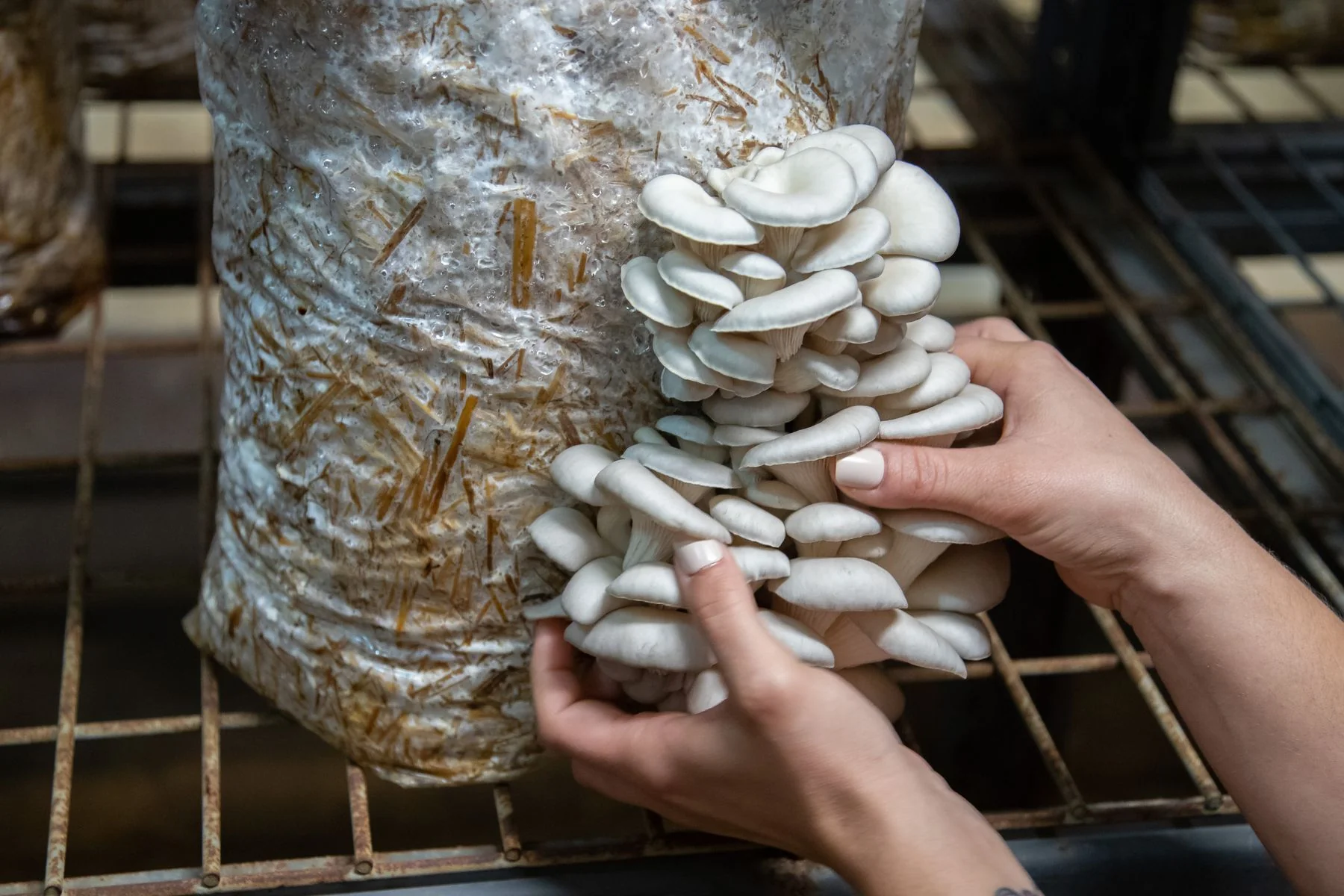
A mushroom name does not tell you which part of the organism went into a blend. Fruiting body, mycelium, and the material used to grow mycelium are different descriptions. Knowing the distinction helps you ask better label questions without assuming that one format guarantees a particular effect or quality.
The fruiting body is the visible mushroom structure
The familiar cap and stem are part of a mushroom's fruiting body, the reproductive structure that produces spores. In a food or supplement ingredient, that phrase identifies a starting material. It does not tell you the species, how the material was processed, how much is in one serving, or whether the finished drink has been studied in people.
A package may describe the same source material as dried, milled, or included in a blend. Those words concern preparation or presentation; they do not replace the specific tissue or growing material that was harvested. When the package gives only a broad mushroom name, record the missing part description as unknown instead of guessing from the product's appearance.
Mycelium and growth substrate are separate label facts
Mycelium is the network of fine fungal threads that grows through a substrate. Depending on the species and production method, it may be grown in a liquid culture or on a solid food material. Research papers examine both fruiting bodies and cultured mycelium, and their measured composition can vary by species, strain, growth conditions, and analytical method.
The word mycelium alone does not establish that a product contains only fungal material. If grown on grain or another substrate, the final ingredient may include residual growth material unless the process separates it. That is a manufacturing detail, not something a consumer can reliably infer from a mushroom picture or a front-of-pack phrase. Look for a specific ingredient statement or a direct manufacturer explanation.
Substrate means the material on or in which the fungus grows. It may contribute to the harvested biomass if it is not separated during production. A label that names a species but not the growth material can leave a reader unable to tell whether the ingredient is a fruiting body, cultured mycelium, or a blend of materials.
This distinction matters most when a shopper has a specific dietary concern, wants to compare manufacturing descriptions, or is trying to understand a product's composition. It should not be turned into a blanket ranking. A substrate-grown mycelium ingredient is not automatically poor, and a fruiting-body claim is not by itself proof of identity, purity, concentration, or clinical benefit.
Why study comparisons need more than a species name
A scientific paper usually describes a defined sample: a named species, a preparation, a dose, and a measurement. One paper might test a water extract of fruiting bodies, while another analyzes whole mycelial biomass. Results from those materials cannot be mapped directly onto a commercial coffee whose per-species amount, processing details, or batch composition are not disclosed.
Even when researchers measure the same compound, differences in sample preparation and laboratory methods can make values difficult to compare. Composition is not the same thing as a health outcome. A report that identifies a chemical constituent does not show that a serving of a blended beverage delivers a meaningful dose or produces a particular result in a person.
A practical label-reading sequence
Start with the complete ingredient list, then note whether the package names a species and identifies the material as fruiting body, mycelium, or another fungal biomass. Check whether the serving amount applies to one named mushroom or to a combined blend. If an individual amount is not broken out, record it as undisclosed instead of dividing the total yourself.
Then look for a description of the growing material and whether the manufacturer says it is separated from the harvested biomass. Ask about the exact product and lot if the distinction affects a dietary or sourcing decision. Keep the answer in the same category as the question: growing material, separation process, and batch test results are separate details.
Avoid turning the distinction into a health promise
Marketing often presents one mushroom part as universally superior. That conclusion would require evidence that compares well-described preparations for a relevant outcome, with suitable methods and enough detail to reproduce the comparison. A review of ingredient chemistry can explain why materials differ, but it cannot prove a broad benefit from every product using one of those materials.
For a product page, the useful question is narrower: what exactly is named, how much is disclosed, and what evidence applies to that preparation? If the answer is incomplete, say so. This approach respects both the research and the limits of what a label can tell you, instead of asking a single phrase to carry more meaning than it contains.
Record what the label actually establishes
For each named mushroom, write down the species, stated fungal part, any disclosed growth material, and the serving or blend basis shown on the package. Keep those observations separate from a manufacturer explanation, a laboratory result, or a clinical study. They answer different questions and should not be collapsed into one quality score.
If the label lists only broad mushroom names or a combined blend, mark the missing material details as unknown. That does not establish that a product is unsafe or ineffective; it limits how precisely its composition can be compared. For the current formula statement and amount disclosures, see the site's ingredient label guide.